Silver Line Laboratories
Chat on WhatsApp+91 98103 84494

Special & custom · Ortho-K

KeratoGenius Ortho-K

Multi-curve reverse-geometry rigid gas-permeable lenses that temporarily reshape the corneal epithelium to correct myopia and astigmatism, made for overnight wear.

Customised product
Dk
141
Wear
Overnight
Lens
Customised
TREATMENT ZONEREVERSE ZONEREVERSE ZONELANDING ZONELANDING ZONEEDGE LIFT OVERNIGHT WEAR · REVERSIBLEMULTI-CURVE REVERSE GEOMETRY RGP ILLUSTRATIVE · NOT TO SCALE
On the eye

An Ortho-K lens, blink by blink.

The fluorescein film from our home page: a KeratoGenius Ortho-K lens on the eye under blue light. The patient blinks and the lens settles back into place.
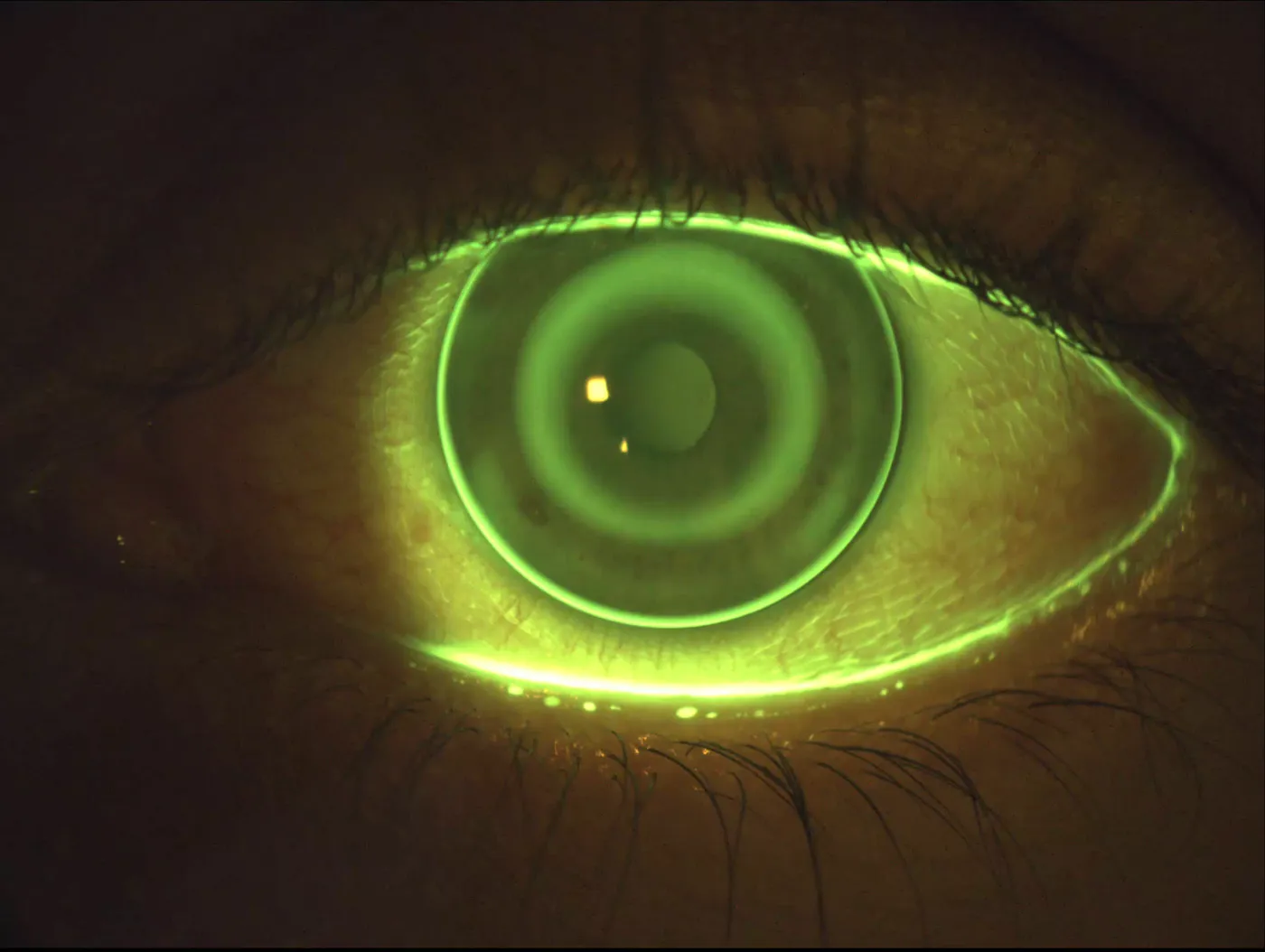
Fluorescein pattern of an Ortho-K lens on the eye under blue light: a dark central treatment zone, a bright green ring of tear film in the reverse zone, and the landing zone at the edge
Fluorescein viewAn Ortho-K lens on the eye, lit with blue light after fluorescein dye. The green shows where tear film sits under the lens.
How it works

Reshaping the cornea while you sleep. Reversible by design.

KeratoGenius Ortho-K lenses are specially designed multi-curve reverse-geometry RGP lenses. Worn overnight, they temporarily reshape the corneal epithelial layer to correct myopia and astigmatism up to −4.00 cylinder.

  • Safe and reversibleThe treatment is temporary. If the lenses are discontinued, the epithelium reverts to its original shape and thickness.
  • Myopia controlIntended to reduce myopia progression, particularly for children and adolescents.
  • Treatment zoneCentral flattening restores clear vision; peripheral changes support myopia control.
  • Lens zonesTreatment zone, reverse zone, landing zone and edge lift.

The Ortho-K range

Spherical and toric Ortho-K lenses. Both are customised products.

All customised
Parameters

Range

LensSphereCylinder
KGOK · spherical−0.50 to −10.00 DNone
KGOK-TR · toric haptic−5.50 to −10.00 DToric up to −4.00 D

Dk 141 · overnight wear · blue and green handling tint.

FAQ

Ortho-K questions from patients and parents

From the approved patient FAQ. Your eye care practitioner will advise on your own eyes.

All questions
What is Ortho-K and how does it work?
Orthokeratology (Ortho-K) uses specially designed rigid gas permeable lenses, usually worn during sleep, to temporarily reshape the front surface of the eye (the cornea). The lenses are removed after waking, allowing many patients to see more clearly during the day without glasses or daytime contact lenses.
Is Ortho-K safe for children?
Ortho-K may be appropriate for carefully selected children when professionally fitted and monitored. However, sleeping in contact lenses increases the risk of corneal infection, which can sometimes threaten vision. Strict hygiene, parental supervision when needed, and regular follow-up visits are essential.
Can Ortho-K slow my child's increasing spectacle power?
Studies show that Ortho-K can slow the growth of the eye (axial elongation), which contributes to myopia progression in many children. Results vary, and it cannot guarantee that myopia will stop. Treatment effectiveness must be monitored over time.
Will Ortho-K permanently remove my child's power?
No. The change in corneal shape and the resulting clear daytime vision are temporary. If Ortho-K is stopped, the cornea gradually returns towards its previous shape and the need for vision correction typically returns. This is separate from its potential benefit in slowing myopia progression.
How many hours should Ortho-K lenses be worn?
They are generally worn during the prescribed overnight sleep period, commonly around 7 to 8 hours. The exact schedule depends on the lens and the practitioner's instructions. Do not extend wear to compensate for missed treatment without professional advice.
How should Ortho-K lenses be cleaned?
Wash and dry hands before handling the lenses. Clean, disinfect and store them using the specific products and steps prescribed for your Ortho-K lens. Never use tap water or saliva. Saline alone does not disinfect lenses, and hydrogen peroxide systems must be fully neutralised before lens insertion.
How often are follow-up appointments required?
Follow-up visits are essential to check vision, lens fitting and corneal health. An early review, often after the first night of wear, is commonly arranged, followed by further appointments as advised. Attend all scheduled reviews even if vision seems good.
What happens if my child's eyes become red or painful?
Remove the lenses immediately and stop lens wear. Seek urgent assessment from an eye care professional, especially if there is pain, light sensitivity, discharge or reduced vision. Do not restart Ortho-K until a practitioner confirms it is safe.
Resources

Technical Literature

Reference material from Silver Line Laboratories for eye care professionals.

PDF For eye care practitioners

KeratoGenius Ortho-K practitioner guide

Orthokeratology principles, a fitting flow chart, first-lens selection for spherical and toric Ortho-K lenses, worked fitting examples and common fitting challenges.

PDF · 33 pages · 9.2 MB View the Ortho-K guide

Discuss an Ortho-K fitting or a custom enquiry.